
Key facts
- Researchers from Boston University analyzed blood samples from a small group of former football players..1 1
- Researchers said eMTBR-tau levels were highest among people who had both CTE and Alzheimer’s.1 The team examined p-tau217, a blood marker used to detect Alzheimer’s disease, and found that it was elevated only in participants who had Alzheimer’s.1
- Alosco is co-director of clinical research at the BU CTE Center..1 1
Researchers from Boston University analyzed blood samples from a small group of former football players and found high concentrations of a protein associated with Alzheimer’s in those with advanced CTE, or chronic traumatic encephalopathy, or CTE.1
The findings were announced Thursday at a scientific conference in Boston and published in the peer-reviewed journal JAMA.2
The findings come on the heels of another peer-reviewed study that identified elevated levels of a related protein in people who died with the condition.2
CTE can only be definitively diagnosed after death by analyzing brain tissue..1 The threat that CTE poses to football players has recently come into sharper focus.2
21 Football Players Studied
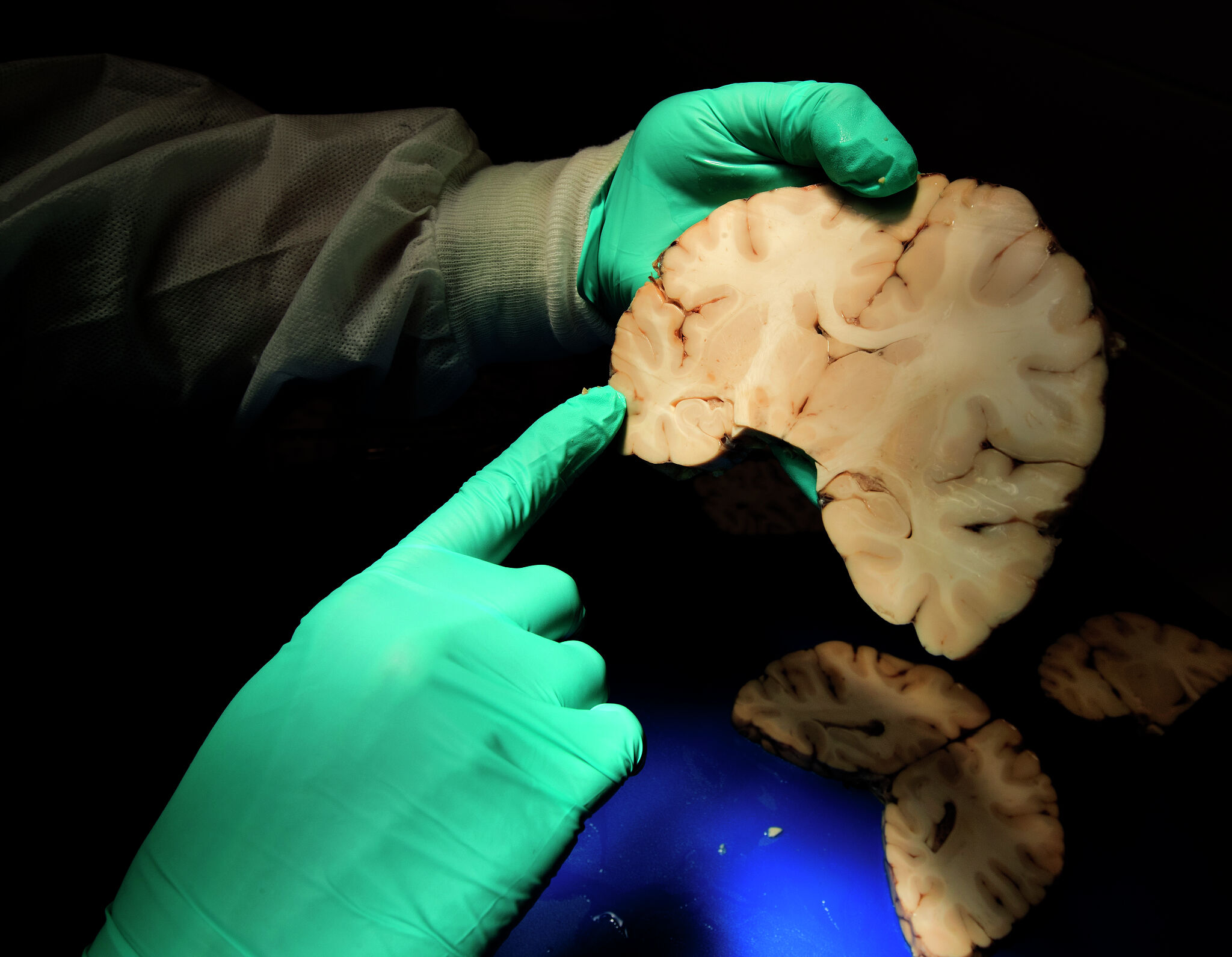
The new research examined 21 football players, including former professional, collegiate, and high school athletes, who gave blood samples while they were alive and donated their brains.1
Of the players studied, 18 had confirmed CTE, and most of the players diagnosed with advanced disease were diagnosed with the condition.1
Researchers looked for a protein in the blood that could be a marker of tau tangles in the brain, which form inside neurons and can damage and kill them.2
The study found that athletes with more advanced disease had higher concentrations of the protein than those at early stages and people who did not have CTE.2
Blood Test Not Available to Public
Researchers said eMTBR-tau levels were highest among people who had both CTE and Alzheimer’s..1 The team examined p-tau217, a blood marker used to detect Alzheimer’s disease, and found that it was elevated only in participants who had Alzheimer’s.1
The sample size of the study is small, and researchers cited several limitations, including the limited number of participants with low-stage CTE and the lack of age-matched controls.1
The blood test is not FDA-approved, is not available to the public, and should not currently be used to diagnose CTE.1
The protein identified in the study is an exciting biomarker, said Dr. Ramon Diaz-Arrastia, a neurology professor at the University of Pennsylvania Perelman School of Medicine, who was not involved in the new research.3 2
Researchers Cautiously Optimistic
Michael Alosco, co-director of clinical research at Boston University’s CTE Center and co-senior author of the study, said, “With this new study, we are optimistic that the same will be true for CTE.”1
Alosco said, “We are still in the discovery phase and it’s a small sample size, but if future studies validate these findings, this blood test will allow us to detect CTE with a high level of accuracy and open the doors to clinical trials and treatment.”
Alosco said, “I’m cautiously optimistic that we can really understand this finding and move it forward in the next five years or so.”
Researchers from Boston University and Banner Health say they have identified a blood marker that could eventually allow doctors to detect CTE in people while they are still alive1